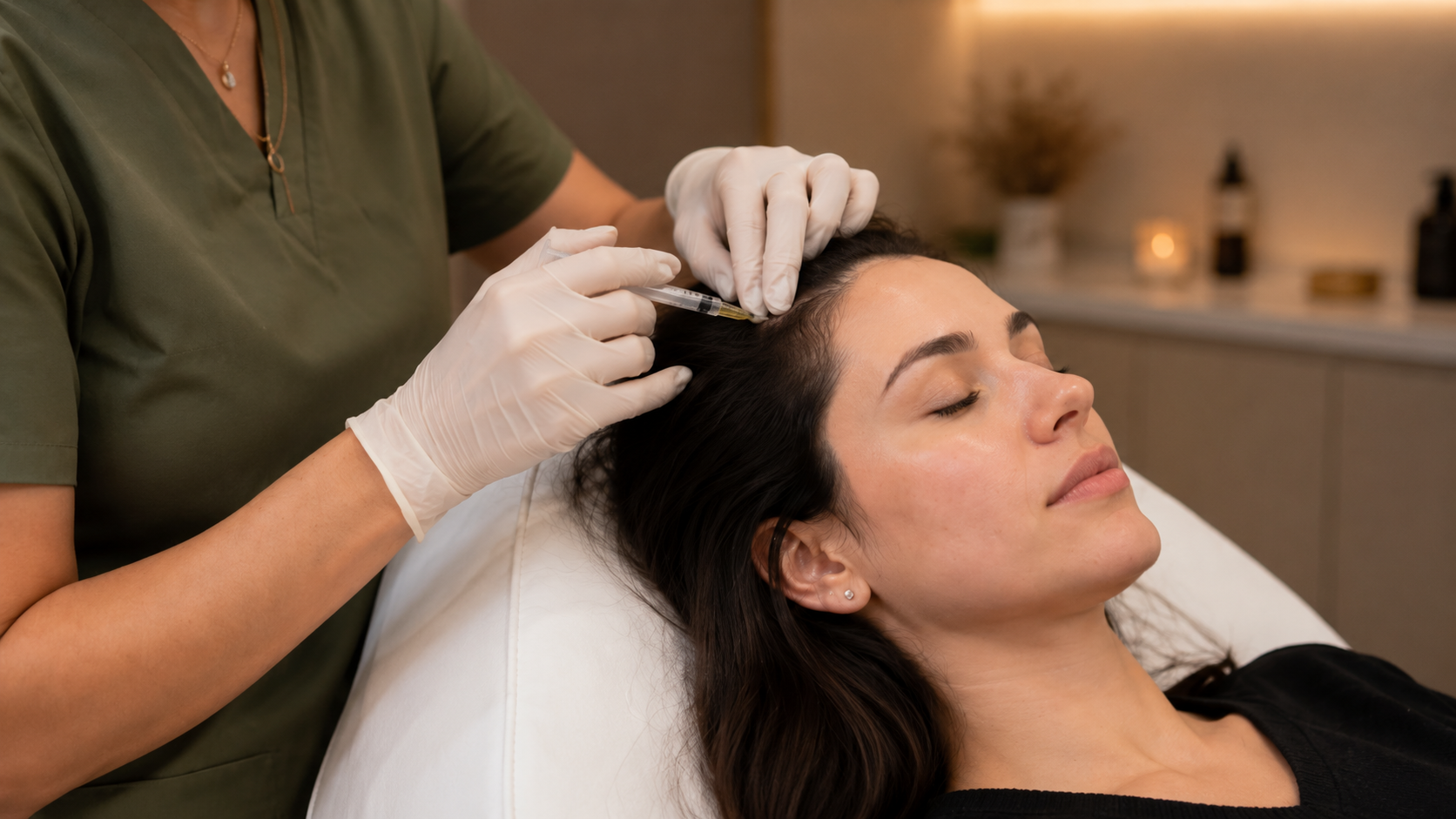
PRP Skin Rejuvenation in Calgary: Benefits, Results, and How WorldPRP Works
When it comes to skin rejuvenation, not everyone is looking to dramatically change their appearance. For many patients, the goal is simply healthier, smoother, firmer skin that still looks completely natural.
That’s where Platelet-Rich Plasma (PRP) skin rejuvenation comes in.
PRP is a regenerative aesthetic treatment that uses components from your own blood to support the body’s natural healing processes. By harnessing concentrated platelets and their associated growth factors, PRP treatments can help support collagen production, improve skin texture, soften the appearance of fine lines, and promote healthier-looking skin over time.
Unlike treatments designed to add volume or temporarily relax facial muscles, PRP focuses on encouraging your skin’s own regenerative processes.
At InMySkin Wellness & Aesthetics in Calgary, we use the WorldPRP system to prepare concentrated Platelet-Rich Plasma for personalized skin rejuvenation treatments.
What Is PRP Skin Rejuvenation?
PRP stands for Platelet-Rich Plasma.
Your blood naturally contains platelets, which play an important role in clotting, wound healing, and tissue repair. Platelets also contain growth factors and proteins involved in the body’s natural regenerative processes.
During a PRP treatment, a small amount of your blood is drawn and placed into a centrifuge. The blood is then spun to separate and concentrate the platelet-rich plasma from other components.
The resulting PRP can then be injected into targeted areas of the skin or used alongside treatments such as microneedling.
Because PRP comes directly from your own blood, it is considered an autologous treatment, meaning the treatment material originates from your own body.
Rather than introducing volume or changing facial structure, PRP is used to support the biological processes involved in repairing and renewing your skin.
How Does PRP Help Rejuvenate Your Skin?
Platelets contain growth factors involved in cellular repair and tissue regeneration.
When concentrated PRP is introduced into targeted areas, these growth factors help support the processes involved in collagen production and tissue remodeling.
Collagen is one of the primary structural proteins responsible for keeping skin firm, smooth, and resilient. Natural collagen production gradually decreases with age, contributing to fine lines, thinner skin, reduced elasticity, and changes in texture.
PRP treatments are designed to encourage your skin’s natural regenerative response rather than create an immediate cosmetic change.
Over time, patients may notice improvements in:
- Skin texture and smoothness
- Firmness and elasticity
- Fine lines
- Acne scars
- Uneven skin tone
- Crepey or thinning skin
- Overall skin quality
- Radiance and a healthier-looking complexion
Because collagen remodeling takes time, PRP results develop gradually rather than overnight.
What Can PRP Treat?
One of the biggest advantages of PRP skin rejuvenation is its versatility.
Depending on your individual skin concerns and treatment plan, PRP may be used to address:
- Fine lines and wrinkles
- Dull or tired-looking skin
- Uneven texture
- Acne scars
- Enlarged pores
- Crepey or thinning skin
- Under-eye skin concerns
- Loss of firmness and elasticity
- Overall skin quality
- Hair thinning and early hair loss
Rather than simply masking these concerns, PRP supports the regenerative processes that contribute to healthier-looking skin over time.
PRP for Acne Scars and Uneven Skin Texture
Acne scars can remain long after active breakouts have cleared, particularly when changes in collagen leave the skin with uneven or indented texture.
PRP can be incorporated into treatment plans designed to improve the appearance of acne scarring by supporting collagen remodeling and skin repair.
It is frequently paired with microneedling because the two treatments complement one another. Microneedling creates controlled micro-injuries that initiate the skin’s repair response, while PRP provides concentrated platelets and growth factors to support that regenerative process.
Over a series of treatments, this approach may help improve:
- Mild acne scarring
- Uneven texture
- Enlarged pores
- Overall smoothness
- Skin quality
The appropriate treatment depends on the type and severity of acne scarring, which is why a professional skin assessment is an important first step.
PRP for the Under-Eye Area
The skin around the eyes is naturally thinner and more delicate than skin elsewhere on the face. As collagen levels decrease with age, the area can begin to appear thinner, crepey, or tired.
PRP may be used as part of a personalized treatment plan to support skin quality in the under-eye area.
Because PRP works through gradual regenerative processes rather than adding artificial volume, it may appeal to patients looking for a natural approach to improving the appearance and quality of the skin around their eyes.
Not every under-eye concern has the same cause, however. Hollowing, pigmentation, visible blood vessels, and changes in skin quality may require different approaches. A consultation can help determine whether PRP is appropriate for your specific concern.
PRP Microneedling: Why Are the Treatments Often Combined?
PRP and microneedling are frequently performed together because both treatments focus on stimulating the skin’s natural repair processes.
Microneedling uses very fine needles to create controlled microchannels in the skin. This triggers a natural healing response and encourages new collagen production.
PRP can then be incorporated into the treatment to further support the regenerative process.
Together, PRP microneedling may help address:
- Acne scars
- Fine lines
- Enlarged pores
- Uneven skin texture
- Loss of firmness
- Dullness
- Overall skin quality
For patients researching a “PRP facial,” PRP microneedling is often the treatment they’re referring to.
PRP vs. Microneedling: What’s the Difference?
Although they are commonly combined, PRP and microneedling are not the same treatment.
Microneedling mechanically creates controlled micro-injuries that stimulate the skin’s natural healing and collagen response.
PRP uses concentrated platelets from your own blood to provide growth factors associated with tissue repair and regeneration.
Each can be used independently depending on your skin concerns, but combining them allows both approaches to support the same regenerative process.
Your provider can recommend whether PRP alone, microneedling alone, or a combination of the two makes the most sense for your skin.
What Makes WorldPRP Different?
Not every PRP preparation system is identical.
At InMySkin Wellness & Aesthetics, we use WorldPRP, an advanced Platelet-Rich Plasma preparation system designed to efficiently separate and concentrate platelets from a patient’s own blood.
The WorldPRP system uses a patented hourglass-shaped tube and a rapid 3-minute centrifuge process to prepare the PRP.
The system is designed to produce a concentrated platelet preparation while minimizing contamination from red and white blood cells. WorldPRP reports platelet purity of up to 95% with its preparation system.
The goal is to provide a consistent, concentrated PRP preparation that can then be incorporated into a treatment plan based on each patient’s individual needs.
What Happens During a PRP Treatment?
Your appointment begins with a consultation to discuss your skin concerns, treatment goals, medical history, and whether PRP is appropriate for you.
If PRP is recommended, a small sample of blood is drawn, similar to a routine blood test.
The blood is then processed using the WorldPRP centrifuge system to separate and concentrate the platelet-rich plasma.
Once prepared, the PRP can be injected into specific treatment areas or incorporated into a microneedling procedure, depending on your treatment plan.
Treatment time varies depending on the areas being addressed and whether PRP is being combined with another procedure.
What Is PRP Recovery Like?
PRP treatments typically involve relatively little downtime, although recovery varies depending on the treatment area and whether PRP is combined with microneedling.
Immediately after treatment, you may experience:
- Redness
- Mild swelling
- Tenderness
- Sensitivity
- Minor bruising around injection sites
These effects are generally temporary. Many patients experience redness, swelling, or tenderness for approximately one to three days, although individual recovery times vary.
If PRP is combined with microneedling, your provider will give you specific aftercare instructions to help protect your skin while it recovers.
When Will You See Results From PRP?
One of the most important things to understand about PRP is that results are gradual.
PRP isn’t designed to produce an immediate structural change. Instead, it supports the biological processes involved in collagen remodeling and tissue repair.
First Few Days
Mild redness, swelling, or sensitivity from the procedure begins to settle.
First Few Weeks
Some patients begin noticing improved radiance and healthier-looking skin.
Following Months
Changes in texture, firmness, fine lines, and overall skin quality may become more noticeable as collagen remodeling continues.
Because everyone responds differently, the timing and degree of improvement vary between patients.
How Many PRP Treatments Will I Need?
Your ideal treatment plan depends on your age, skin quality, concerns, and desired results.
Some patients may notice improvement after a single treatment, while others benefit from a series.
A common PRP treatment plan may include approximately three sessions spaced several weeks apart, followed by maintenance treatments as recommended by your provider.
PRP should be viewed as a progressive treatment. The goal is to support gradual improvement in skin quality rather than create an immediate transformation.
Who Is a Good Candidate for PRP Skin Rejuvenation?
PRP may be worth considering if you’re looking for a regenerative approach to skin rejuvenation and want subtle, natural-looking improvement.
It may be appropriate for patients concerned about:
- Early signs of aging
- Fine lines
- Uneven texture
- Mild skin laxity
- Acne scarring
- Enlarged pores
- Crepey skin
- Under-eye skin quality
- Dullness
- Overall skin rejuvenation
PRP isn’t appropriate for everyone. Your medical history, medications, current skin condition, treatment area, and goals should all be reviewed before treatment.
A personalized consultation is the best way to determine whether PRP is right for you.
PRP Skin Rejuvenation in Calgary
Calgary’s dry climate can be particularly challenging for maintaining healthy-looking skin.
Low humidity, strong UV exposure, cold winters, indoor heating, and significant seasonal temperature changes can all contribute to dehydration, dullness, sensitivity, and changes in overall skin quality.
While PRP doesn’t replace a good skincare routine or daily sun protection, regenerative treatments can be incorporated into a broader plan designed to maintain healthier-looking skin throughout the year.
At InMySkin Wellness & Aesthetics in Calgary, PRP treatments are personalized based on your skin, concerns, lifestyle, and long-term aesthetic goals.
Frequently Asked Questions About PRP
Is PRP the same as a PRP facial?
“PRP facial” is a broad term often used to describe aesthetic treatments that incorporate Platelet-Rich Plasma. PRP is frequently combined with microneedling, but it can also be used in other ways depending on your treatment plan.
Is PRP natural?
PRP is prepared from a sample of your own blood. Because the treatment material comes from your own body, it is considered autologous.
Does PRP hurt?
Comfort varies depending on the treatment area and technique. Patients may experience pressure, pinching, or mild discomfort during injections or microneedling. Your provider can explain what to expect before treatment.
How long does PRP take to work?
PRP results develop gradually. Some patients notice improved radiance within the first few weeks, while changes associated with collagen remodeling may continue developing over the following months.
How long is the downtime after PRP?
Mild redness, swelling, tenderness, or bruising may occur following treatment. These effects often improve within a few days, although recovery varies between patients and treatment techniques.
How many PRP treatments do I need?
Treatment plans vary, but a series of approximately three sessions spaced several weeks apart may be recommended, followed by maintenance treatments when appropriate.
Can PRP help acne scars?
PRP may be incorporated into treatment plans for certain types of acne scarring, particularly when combined with microneedling. Your provider can assess your scars and recommend the most appropriate approach.
Can PRP be used under the eyes?
PRP may be used to support skin quality in the under-eye area for appropriate candidates. Because different under-eye concerns have different causes, an assessment is important before deciding on treatment.
Can PRP be combined with microneedling?
Yes. PRP and microneedling are commonly combined because both treatments support the skin’s natural repair and collagen-remodeling processes.
Experience WorldPRP Skin Rejuvenation at InMySkin
Beautiful skin doesn’t have to mean looking different. Sometimes it’s about helping your skin look smoother, stronger, refreshed, and more like itself.
At InMySkin Wellness & Aesthetics in Calgary, WorldPRP allows us to offer a regenerative approach to improving skin texture, firmness, fine lines, acne scars, under-eye skin quality, and overall radiance.
Whether you’re new to aesthetic treatments or looking to add regenerative treatments to your existing skincare plan, our team can assess your skin and determine whether PRP, PRP microneedling, or another treatment is the right fit for your goals.
Book your consultation today to learn how WorldPRP can become part of your personalized skin rejuvenation plan.